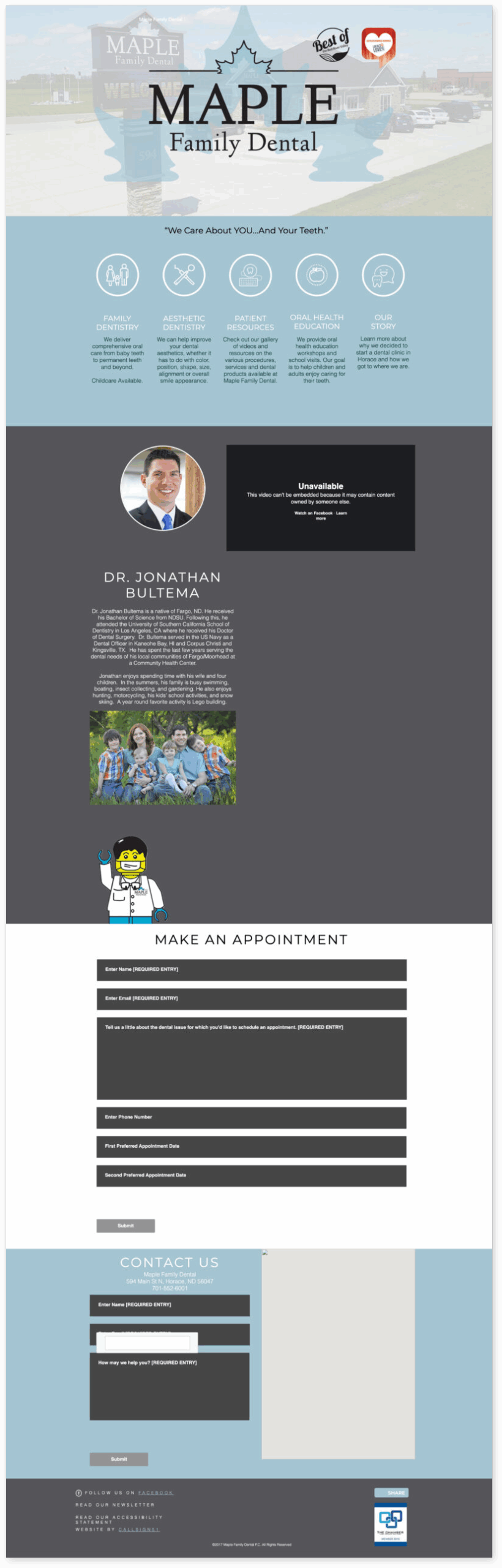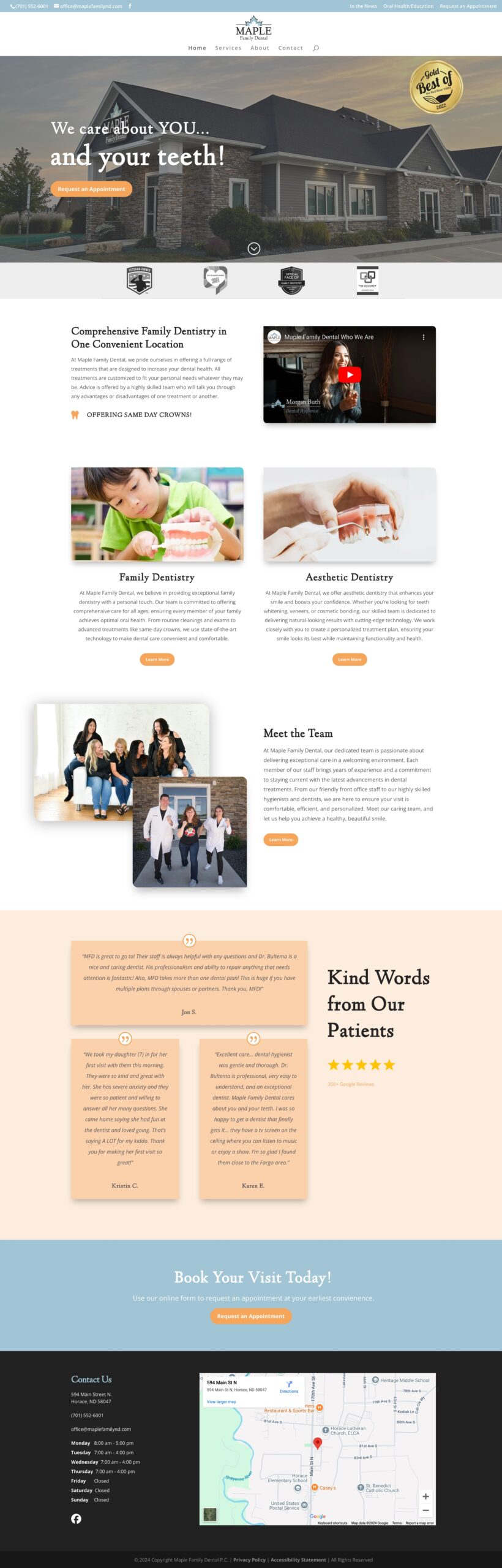

Turning Digital Invisibility into a High-Conversion Growth Engine.
Re-architecting a fragmented digital footprint into a high-performance acquisition engine. By leveraging behavioral psychology and search-optimized design, I transformed a static site into a primary driver for measurable patient growth.
%
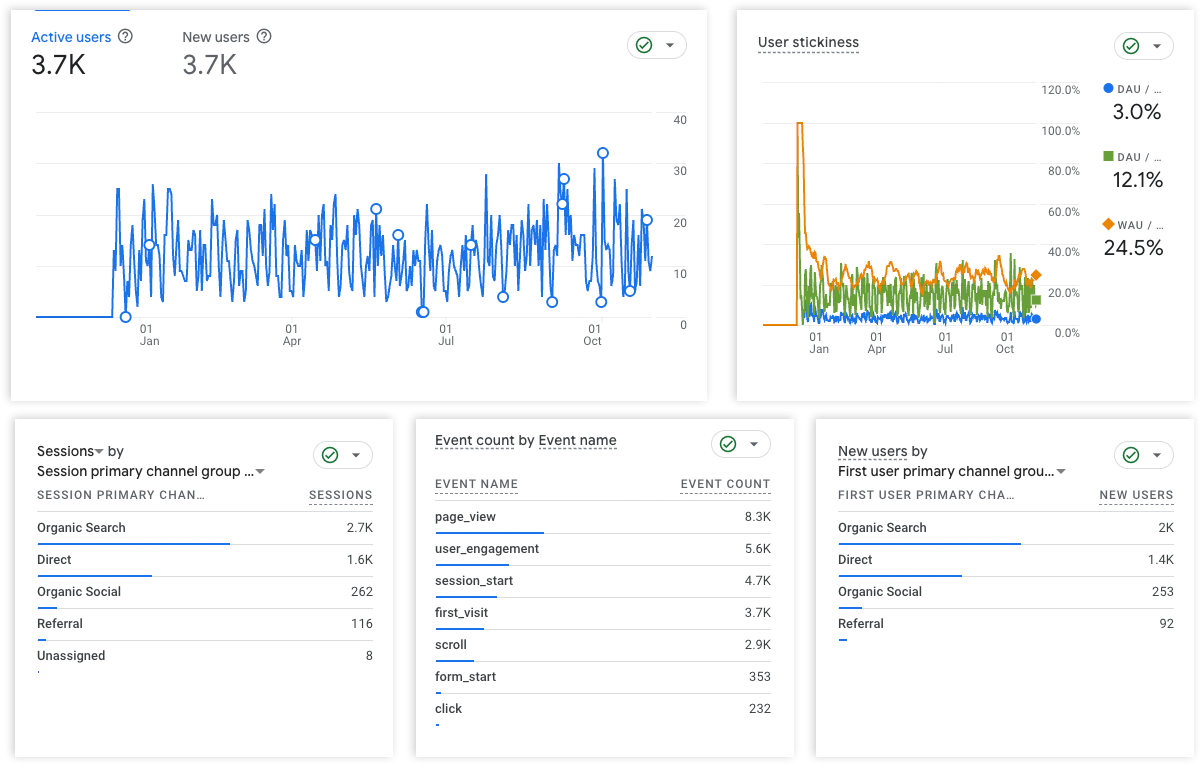
Increase in Organic Search Traffic
%
Rise in New Site Visitors
Ranking for Critical Local Industry Keywords
The Challenge
The Problem
“We were not showing up in organic search results, even when patients explicitly searched by our practice name.”
The Goal
The objective was to transform this operational liability into a primary acquisition channel. This required a dual-track strategy: engineering a streamlined UI to establish immediate digital trust and re-aligning the site’s IA with high-intent search behavior to maximize organic visibility—all while maintaining strict WCAG accessibility standards.
Success required more than a visual refresh; it demanded a re-engineering of the patient journey from the first search query to the final click.
The Strategy & Process
To bridge the gap between ‘invisible’ and ‘industry leader,’ I began with a deep-dive audit into the psychology of patient behavior and the mechanics of search intent.
01
Discovery & Audit
Friction Analysis & Behavioral Mapping
I identified that potential patients were abandoning the site due to “information density.” By mapping these drop-off points against local search intent, I re-prioritized the IA around high-value services like Pediatric and Emergency Dentistry. This ensured the new design was anchored in actual user needs rather than aesthetic assumptions.
02
Architecture & Logic
Trust-Centered UI & Progressive Disclosure
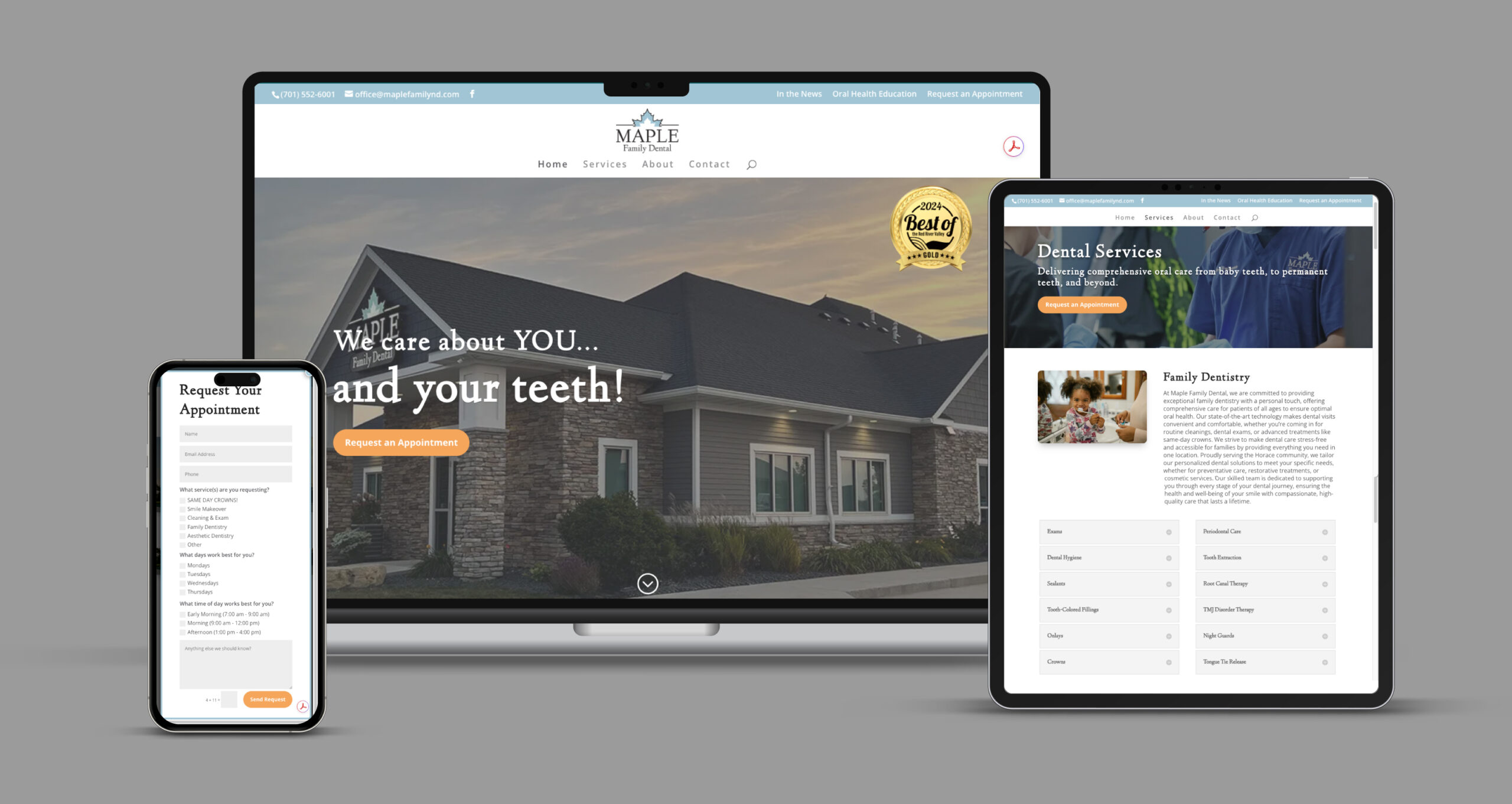
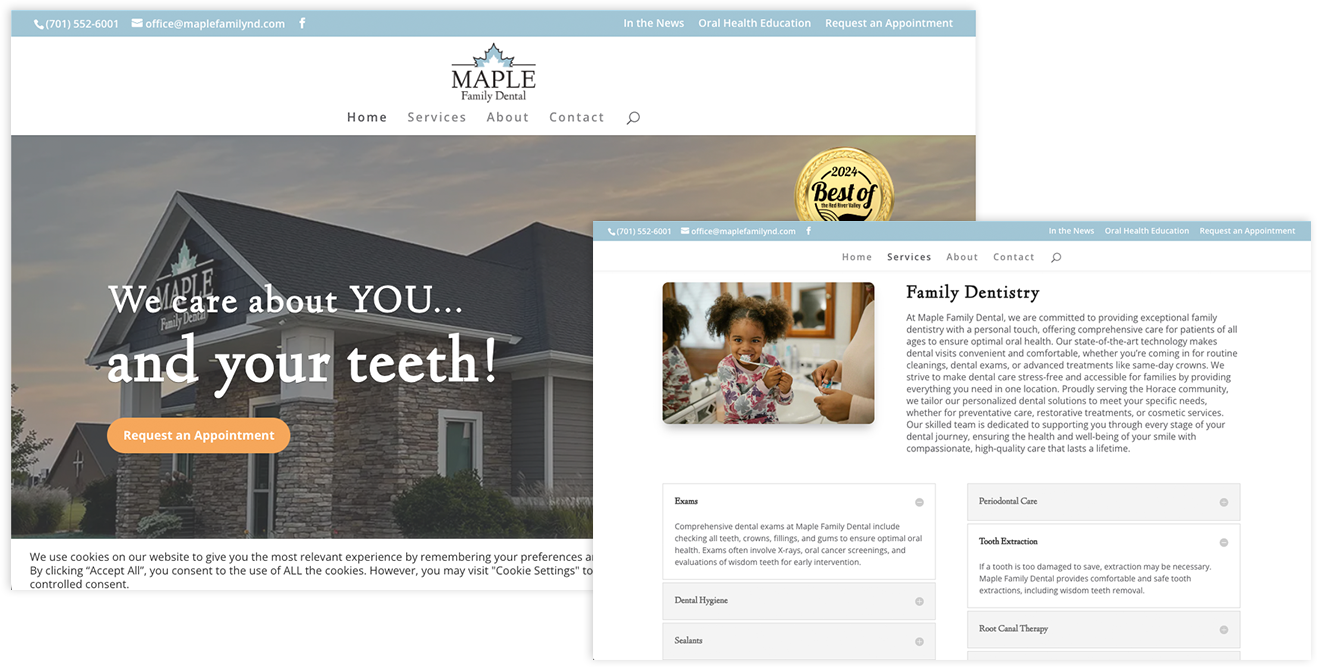
In healthcare, clarity equals credibility. I implemented a visual hierarchy that prioritized high-intent actions—like appointment scheduling—above the fold. By utilizing a high-contrast interface and progressive disclosure, I made complex dental information digestible, significantly reducing cognitive load and bounce rates.
03
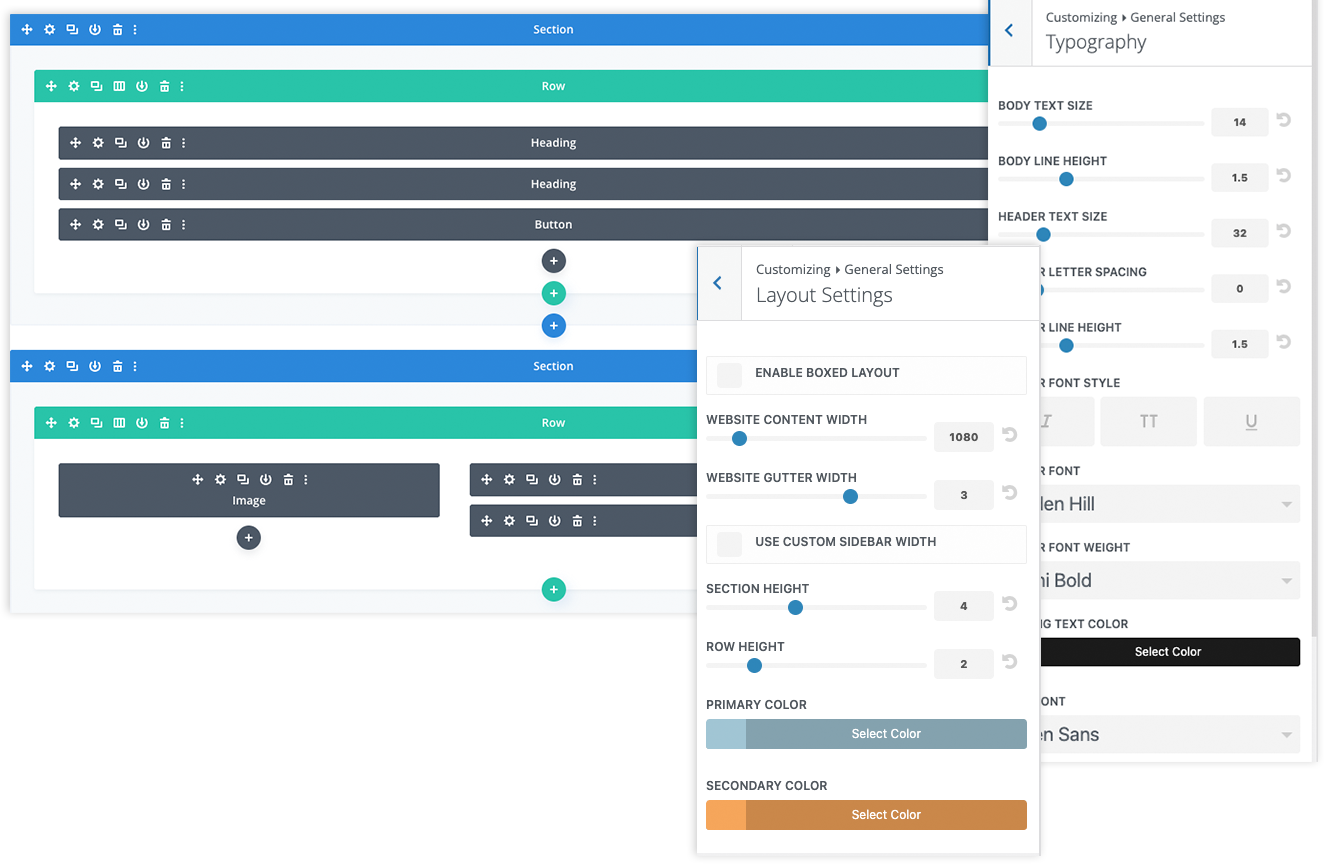
Design System Governance
Scalable UI Standards & Brand Cohesion
04
Testing & Validation
Metric-Driven Results & SEO Growth
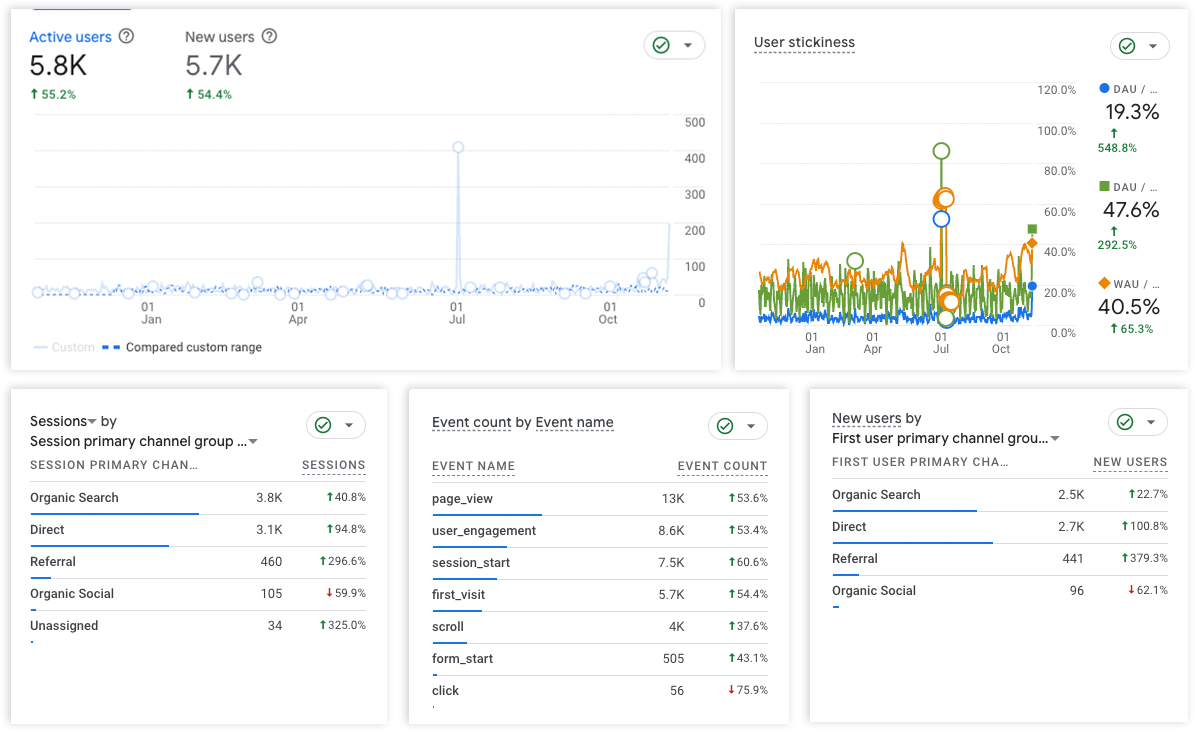
Post-launch, I partnered with the client to interpret Google Analytics data. We confirmed a 41% surge in organic traffic and a 54% increase in new visitors. This phase proved that the intersection of technical SEO and human-centric UX is the primary driver for business ROI.
The Result
By unifying IA, behavioral logic, and systemic governance, we didn’t just launch a website; we activated a self-sustaining acquisition engine.
Design as a Growth Engine
Healthcare Trust Patterns
UX “delight” in healthcare is found in clarity and the reduction of anxiety. I refined my approach to designing for vulnerable users through professional, reliable UI.
Technical SEO Ownership
By owning both strategy and execution, I ensured that metadata, H-tags, and alt-text were perfectly synced with the design, resulting in immediate search dominance.
This project reinforced my belief that great design is a business’s most powerful growth lever. By prioritizing trust and clarity over decorative elements, we solved a fundamental discovery problem and set a new standard for the practice’s digital future.